
Conceptual Healthspan Research Platform
AOS is a proposed closed-loop research platform that learns a person's autonomic patterns and gently guides the body toward lower cumulative biological stress, stronger recovery, and long-term physiologic resilience — now including passive urine intelligence with AOS UroSense™.
The Core Idea
The idea of directly changing brainstem settings or forcing one vital sign lower, is an AOS long term objective. Currently, AOS studies how AI can reduce cumulative physiologic stress through sensing, prediction, personalization, and safety-first interventions.
Wearables and connected sensors track ECG, heart rate, HRV, respiration, blood-pressure trends, sleep, SpO₂, activity, temperature, and stress context.
The system learns individual baselines, recovery dynamics, circadian rhythm, autonomic stress load, and long-term trends to model each person differently.
AOS recommends gentle interventions — breathing pacing, sleep optimization, recovery prompts, exercise timing, lifestyle guidance, and clinician-supervised options.
Expanded Sensing
The sensing layer now spans the established wearable suite plus continuous, non-invasive blood-analyte monitoring, automated urinalysis, and nine additional signal domains — each tagged honestly by maturity, from available today to research frontier.
Reading key values without a blood draw: glucose and hemoglobin (available now), hematocrit, white cells, neutrophils, and C-reactive protein (emerging), through optical, sweat, and interstitial-fluid sensing.
Passive urine sensing for blood, nitrite and leukocyte-esterase infection screens, protein, glucose, ketones, pH, specific gravity, and hydration — delivered by AOS UroSense™.
Neurological, cardiovascular depth, metabolic/endocrine, respiratory/fitness, renal/GI, functional, exposome, ocular & voice, and baseline biologic age — turning each body system into a measurable input.
Gut, Liver & Toxin Intelligence
Stool, liver stress, and environmental toxin exposure round out the whole-body picture — connecting digestive, hepatic, and exposure signals to the same autonomic and inflammatory patterns AOS already tracks.
Occult blood, stool color, consistency, and frequency, plus diarrhea/constipation patterns — early bleeding warnings and dehydration clues, with future gut-inflammation and microbiome trends.
Alcohol-exposure trend, medication burden, and liver-stress indicators, integrated with medication safety to explain changes that would otherwise look random.
Carbon monoxide, air quality, heat, cold, altitude, pollen, and travel — context that prevents misreading a normal physiologic response as a false alarm.
Whole-Body Intelligence Framework
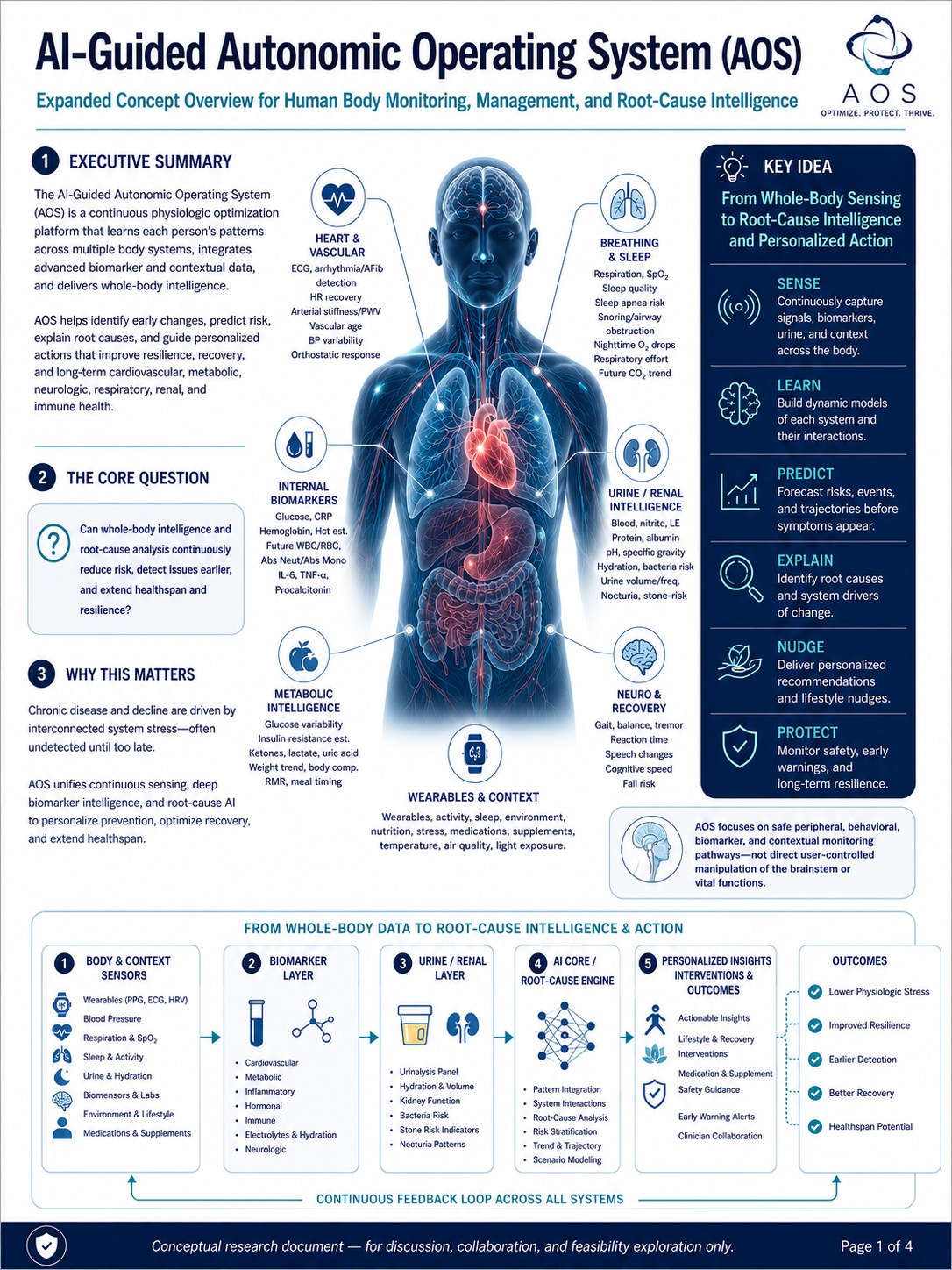
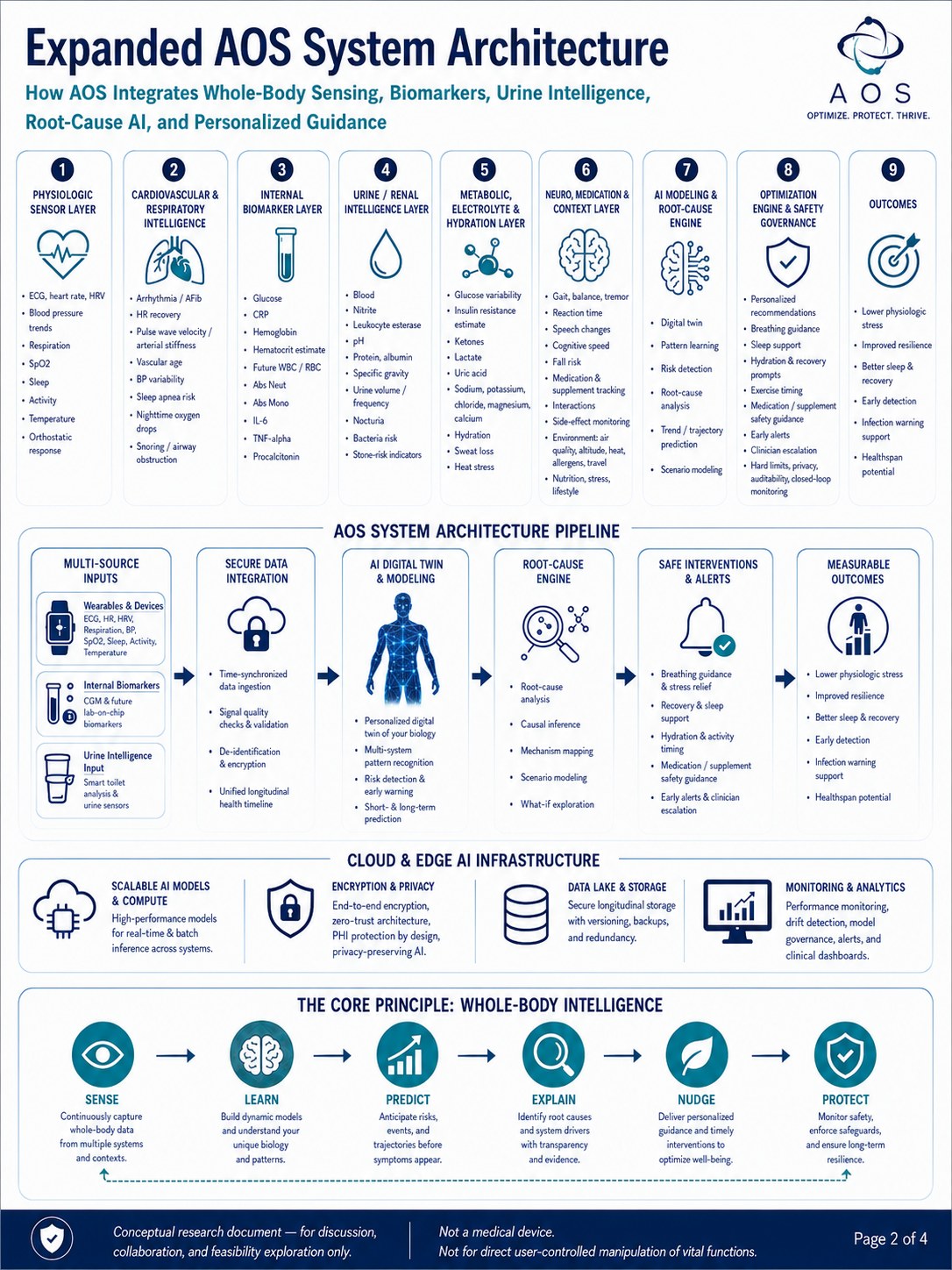
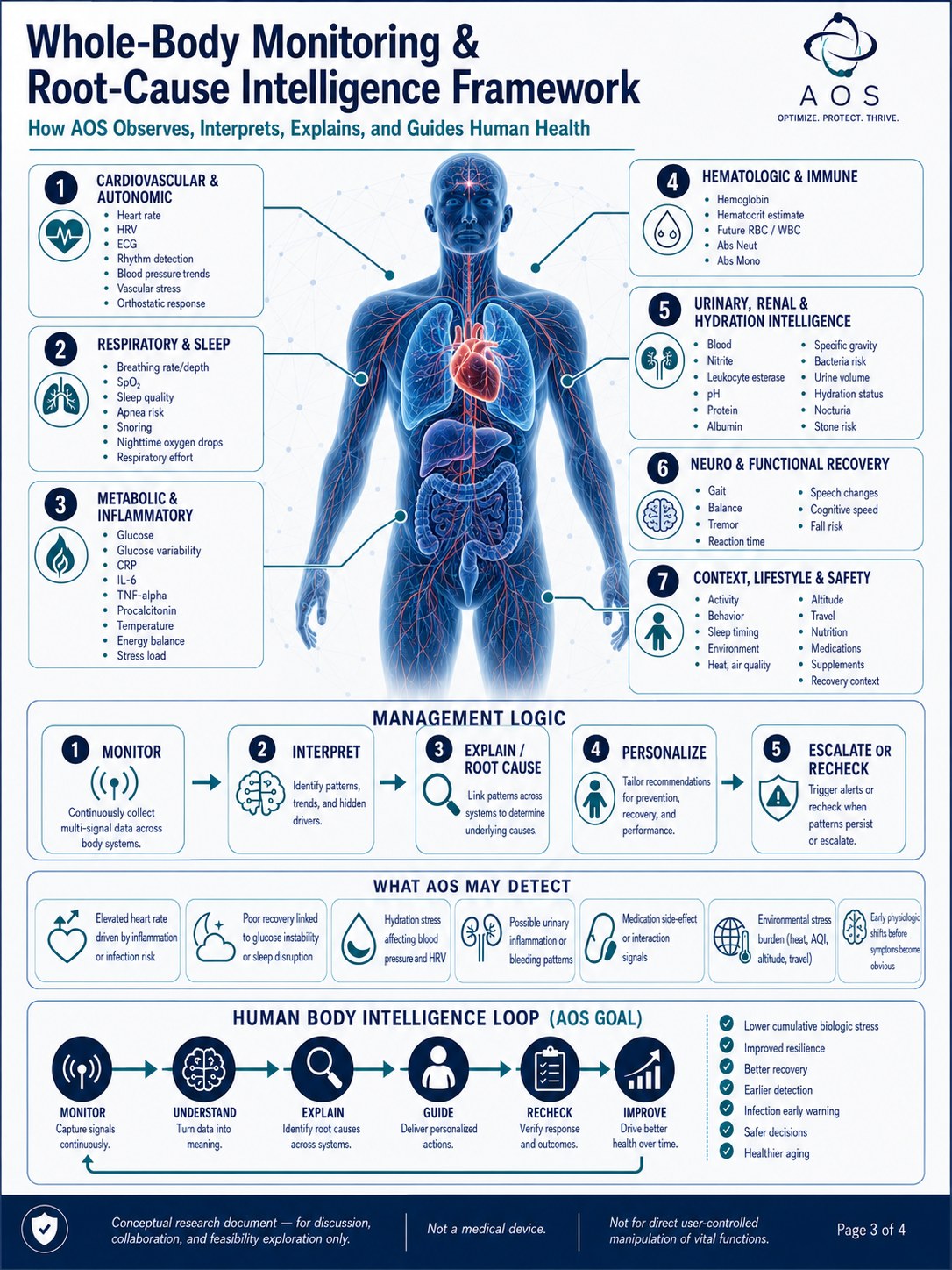
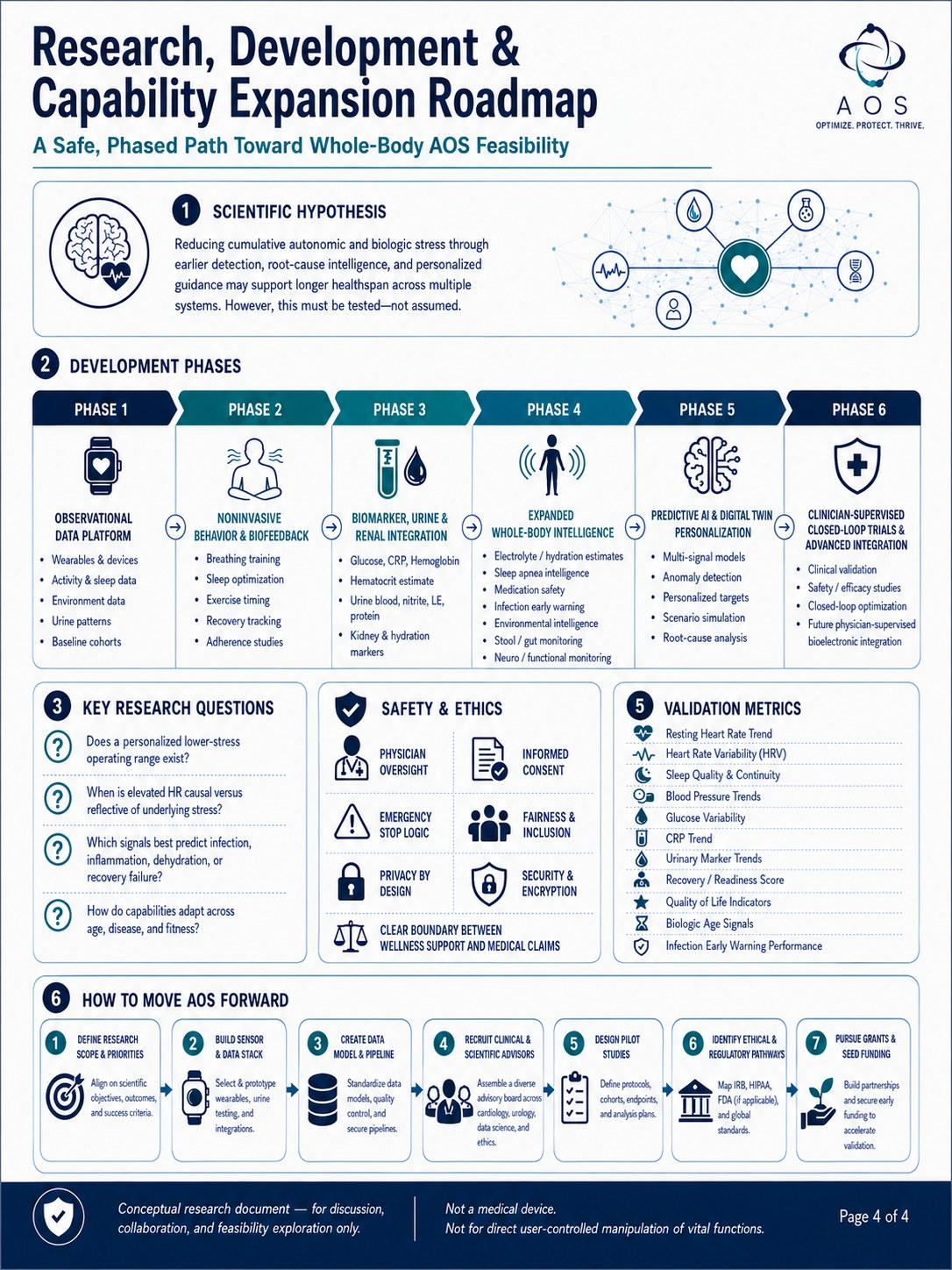
AOS spans far more than urine intelligence. These four in-depth pages lay out the full body-systems map, the system architecture, the root-cause management logic, and the phased research roadmap. Click any page to view it full-size.
 Page 1 of 4
View full size
Page 1 of 4
View full size
How AOS senses, learns, predicts, explains, nudges, and protects across the heart, lungs, kidneys, gut, brain, and metabolism — one continuous feedback loop.
 Page 2 of 4
View full size
Page 2 of 4
View full size
The nine-layer sensor-to-outcome pipeline, from multi-source inputs through the AI digital twin to safe interventions and measurable results.
 Page 3 of 4
View full size
Page 3 of 4
View full size
Seven body-system domains and the five-step management logic AOS uses to monitor, interpret, explain, personalize, and escalate.
 Page 4 of 4
View full size
Page 4 of 4
View full size
The six-phase, safety-gated path from an observational data platform to clinician-supervised trials and advanced integration.
AOS UroSense™ · Urine Intelligence
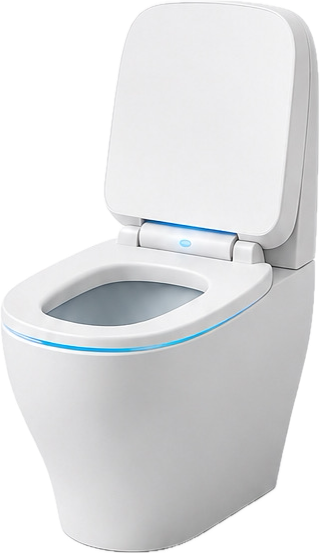
AOS UroSense™ is a Wi-Fi–enabled smart-toilet concept that passively reads common urine markers during normal use and, with AI models, surfaces patterns for your awareness — recommending confirmation through clinical testing or a clinician. It informs; it does not diagnose.
General-wellness concept · not a diagnostic device
Nitrite + leukocyte esterase + urinary frequency.
Infection markers + elevated heart rate + fever trend + low HRV, from the AOS wearable layer.
Protein + high specific gravity + blood-pressure change.
Repeated blood-marker alerts without infection markers.
Urine glucose / ketones + continuous-glucose changes.
Abnormal findings are flagged for the person and clinician — never acted on automatically.
What exists today
In-toilet urine analyzers, clip-on and cartridge sensors, research "precision-health" toilets, and premium wellness fixtures already perform automated urine sensing.
The UroSense™ difference
Not the urine sensing itself — the integration. UroSense fuses urine findings with the AOS autonomic and biomarker layers (HR, HRV, blood pressure, temperature, CGM, CRP) and a personal baseline, for context-aware, root-cause pattern recognition delivered passively at home.
Intelligence Layer
Sensors are commoditizing. The model of a specific person — their baseline, trajectory, and responses — is the asset that compounds. Eight capabilities turn raw signals into personalized, trustworthy insight.
Fuses every signal into one trackable number — the through-line that connects sensing to outcome.
Time-to-event early warning measured against your own baseline, not population norms — catching drift before symptoms.
Aligns guidance to circadian phase; when a nudge lands matters as much as what it is.
Tests "what-if" interventions on a model of you before anything is suggested.
On-device / federated learning plus explainability — credibility features as much as technical ones.
Reads each signal against the others, so a urine flag is interpreted alongside heart rate, HRV, CRP, and glucose.
Interaction checks, side-effect monitoring, and missed-dose detection — flags whether a new symptom or vital-sign shift started after a new medication.
Points to a likely driver — dehydration, infection risk, poor sleep, glucose instability, medication effect, or inflammatory stress — not just that something changed.
Detection Examples & Use Cases
Root-cause detection means connecting signals across systems — not raising an alarm on any single number. Seven example patterns show what AOS would flag, and what it would recommend.
Resting HR ↑, HRV ↓, sleep worsens, temperature ↑, CRP trend ↑, urine leukocyte/nitrite positive.
→ Repeat urine testing, hydrate, symptom check, clinician review if persistent.
Specific gravity ↑, urine volume ↓, HR ↑, HRV ↓, heat index high, sweat loss elevated.
→ Hydration guidance, electrolyte caution, reduce heat exposure, recheck.
Nighttime oxygen drops, snoring/airway obstruction, poor sleep continuity, morning HR elevation.
→ Sleep-apnea risk alert; recommend clinical sleep evaluation if it repeats.
New medication/supplement started, HR/BP changed, dizziness or sleep disruption logged.
→ Medication review prompt; clinician/pharmacist review before changes.
Urine blood detected repeatedly, pain context, pH/specific-gravity changes.
→ Repeat testing and clinician review; persistent hematuria shouldn't be ignored.
High glucose variability, poor sleep, HRV suppression, elevated resting HR.
→ Meal-timing, activity/recovery guidance, glucose-trend review.
Gait change, balance drop, reaction-time slowing, speech change, fall risk rising.
→ Safety alert; recheck; caregiver/clinician escalation depending on severity.
System Architecture
The platform connects body signals, contextual data, predictive AI, intervention logic, and guardrails into a continuous feedback loop.
Collect multi-signal physiologic and context data from wearables, patches, smart rings, phones, connected devices, and the UroSense smart toilet.
Encrypt, synchronize, normalize, and protect data across cloud and edge with privacy-by-design controls.
Learn the autonomic baseline, compute the biologic-wear index, forecast trajectories, and interpret findings in context.
Select personalized, low-risk interventions — and, within strict boundaries, physician-supervised bounded actuation.
Track resting heart rate, HRV, sleep, blood-pressure trends, recovery, quality of life, and future biologic-aging signals.
Toward Bounded Control
Genuine closed-loop control is on the table only where the variable is bounded and a regulated precedent exists — modeled on the artificial pancreas, which already manages a vital metabolic variable safely today.
One well-understood variable at a time.
Fixed, pre-set safety thresholds.
Auto-revert to a safe state on any fault.
A clinician supervises any actuation, validated through controlled trials.
Safety First
The medulla oblongata coordinates vital functions including heart rate, blood pressure, and breathing. AOS avoids direct user-controlled manipulation of the medulla and focuses on safe, measurable, clinician-informed pathways.
Research Roadmap
The central hypothesis is that lowering cumulative autonomic stress may reduce long-term cardiovascular and systemic wear. The relationship between heart rate, autonomic balance, and longevity must be tested rather than assumed.
Collect real-world data across wearables, lifestyle, sleep, environment, urinalysis, and health context to establish baseline patterns.
Study breathing guidance, HRV biofeedback, sleep optimization, recovery timing, and behavior-based autonomic support.
Build individualized digital twins that estimate stress drivers and recommend personalized operating ranges.
Validate dose-response, safety, adherence, and physiologic outcomes — including bounded closed-loop actuation — under controlled protocols.
Explore future bioelectronic medicine, physician-supervised neuromodulation, and multi-system longevity optimization.
Resting HR trend, HRV trend, blood-pressure trend & variability, orthostatic response.
Sleep quality, apnea-risk score, oxygenation trend, recovery/readiness score.
Glucose variability, CRP trend, hemoglobin/hematocrit trend, urinary-marker trends, hydration, nocturia, kidney-stress markers.
Medication-safety alerts, infection early-warning performance, false-alert burden, quality of life, functional recovery, fall-risk reduction, clinician actionability.
Grounded in Real Precedent
AOS draws on published research and current regulatory precedent. These sources ground specific technologies and regulatory references cited in the concept; they don't validate the AOS concept as a whole, which remains unproven and untested.
Collaboration Opportunities
AOS is built for multidisciplinary research — AI, cardiology, neurology, sleep medicine, physiology, biomedical engineering, wearables, cybersecurity, regulatory, and longevity science.
Start a Collaboration DiscussionHypothesis design, physiology, AI modeling, and validation.
Wearables, smart-toilet sensing, secure data pipelines, and AI infrastructure.
Safety guardrails, study design, outcomes, and regulatory pathways.
FDA/SaMD strategy, HIPAA, informed consent, cybersecurity, and risk management.